A car air conditioner that blows warm air can turn a short drive into a sweaty, frustrating trip. Many drivers search for how to fill refrigerant in car because they want to restore cool air without guessing or damaging the AC system. The process can be simple when the system is only slightly low, but it still requires care.
Your car’s AC system uses pressurized refrigerant, specific fittings, and exact pressure ranges. Adding the wrong type or adding too much can create expensive problems. In this guide, you’ll learn why refrigerant level matters, how to recharge a car AC system safely, what mistakes to avoid, and when to stop and call a professional.
Why Filling Car Refrigerant Matters
Car AC refrigerant moves heat out of the cabin so the vents can blow cold air. When the level drops too low, the system may cool poorly, cycle on and off, or stop working. Low refrigerant often points to a leak because automotive AC systems are sealed and should not need regular refills.
Correct refrigerant level also helps protect the compressor. The compressor depends on proper pressure and oil movement to operate safely. Too little refrigerant can reduce cooling and lubrication, while too much can raise pressure and strain hoses, seals, and internal parts.
Filling refrigerant properly can improve comfort, reduce compressor stress, and help you spot larger AC problems before they become costly.
Step-By-Step Guide To How to Fill Refrigerant in Car
Before you start, understand that a recharge is not a cure for every AC problem. If the system is empty, leaking, noisy, or not engaging, adding refrigerant may only hide the real issue for a short time.

You also need to confirm the correct refrigerant type and pressure specifications for your vehicle. Some cars use R-134a, while many newer models use R-1234yf. Never guess, mix types, or force fittings together. If you are learning how to fill refrigerant in car for the first time, the safest approach is to move slowly, read every label, and stop if anything seems wrong.
Step 1: Confirm The Refrigerant Type
Start by opening the hood and looking for the AC service label. This label is often near the radiator support, firewall, engine bay, or underside of the hood. It should list the refrigerant type, system capacity, and sometimes the oil type.
Do not rely only on the vehicle’s age or a general online chart. Some model years changed refrigerants, and using the wrong one can damage the system or require professional recovery and repair.
If the label is missing or unreadable, check the owner’s manual or contact a dealer, parts specialist, or certified repair shop before buying anything.
Step 2: Gather The Correct Tools And Safety Gear
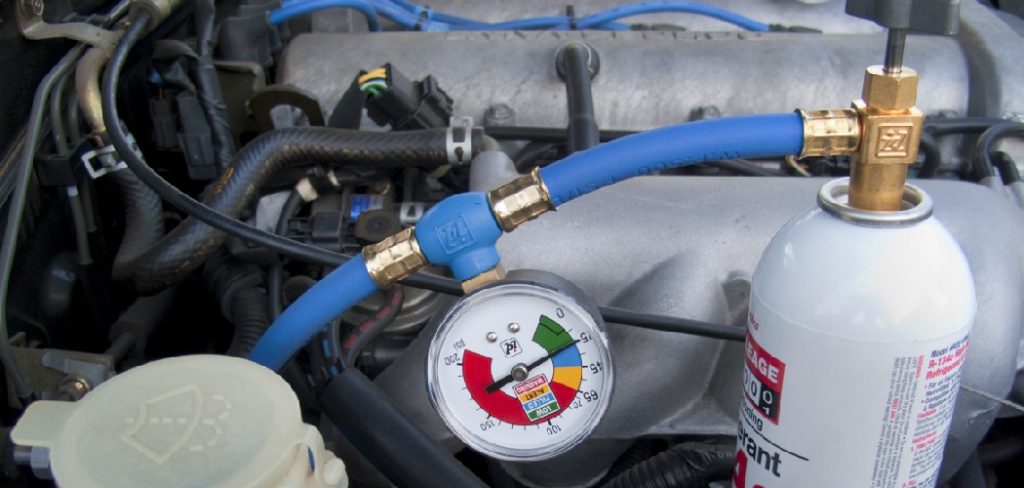
You need the correct refrigerant can, a charging hose with a pressure gauge, safety glasses, and gloves. Refrigerant can cause frostbite if it touches your skin, and AC fittings are under pressure. Protecting your eyes and hands is not optional.
Use a hose and gauge designed for your refrigerant type. R-134a and R-1234yf systems use different service fittings, so the wrong coupler should not fit correctly. Never modify or force a connector.
Work outside or in a well-ventilated area. Keep loose clothing, long hair, tools, and hands away from belts, fans, and hot engine parts.
Step 3: Locate The Low-Pressure Service Port
Your AC system has a high-pressure side and a low-pressure side. For a basic recharge, you connect only to the low-pressure service port. The recharge hose should fit this port and should not connect to the high-pressure port.
Look for the larger AC line that runs between the evaporator and compressor. The low-side service port usually has a plastic cap, sometimes marked with an “L.” Remove the cap and place it somewhere clean so dirt does not enter the fitting.
If you cannot identify the correct port with confidence, stop. Connecting to the wrong side can be dangerous.
Step 4: Check The Starting Pressure
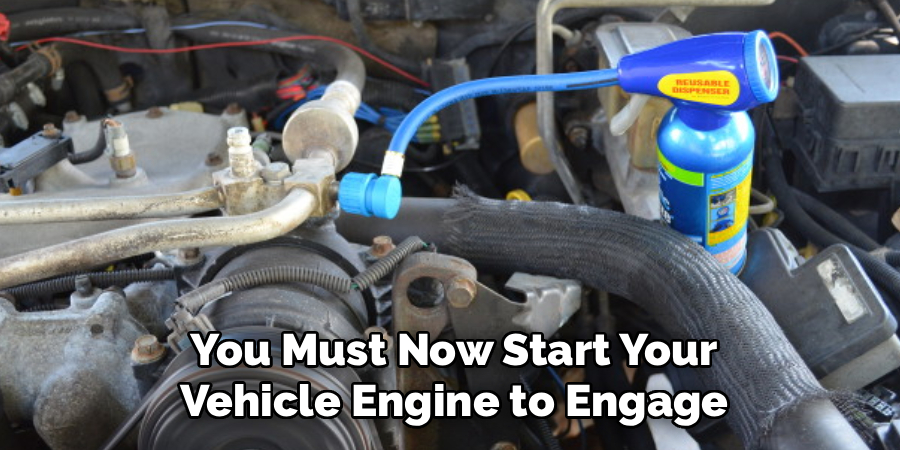
Attach the charging hose coupler to the low-pressure port according to the kit instructions. Make sure the connection clicks or locks in place. A loose connection can leak refrigerant and give you a false reading.
Start the engine, set the AC to maximum cooling, turn the fan to high, and open the doors or windows. This helps the AC run steadily while you check pressure.
Read the gauge and compare it with the pressure chart for the current outdoor temperature. Pressure changes with temperature, so a reading that looks normal on a cool morning may not match a hot afternoon.

Step 5: Add Refrigerant Slowly
If the low-side pressure is below the recommended range and the system is suitable for recharging, follow the kit instructions to begin adding refrigerant. Hold the can as directed on the label. Many kits require the can to stay upright, but you should always follow the product directions.
Add refrigerant in short intervals instead of emptying the can quickly. Pause often and watch the gauge. The goal is to reach the correct pressure range, not to use the full can.
This is where patience matters most. When you practice how to fill refrigerant in car, small amounts and frequent checks help prevent overcharging.
Step 6: Watch The Gauge And Vent Temperature
As refrigerant enters the system, the low-side pressure should rise and the air from the vents may become colder. Use the gauge as your main guide because the feel of the air can be misleading.
Avoid overcharging the AC system. Too much refrigerant can increase pressure, reduce cooling, and stress the compressor. More refrigerant does not mean colder air, and overfilled systems often perform worse than slightly low ones.
If the gauge climbs too high, the compressor cycles rapidly, or the reading jumps in an unusual way, stop adding refrigerant. The system may need professional diagnosis.
Step 7: Disconnect The Hose Safely
When the pressure reaches the correct range, stop the flow of refrigerant. Follow the kit instructions for closing the valve, releasing the trigger, or removing the can. Do not rush this step because the hose and fitting may still contain pressure.
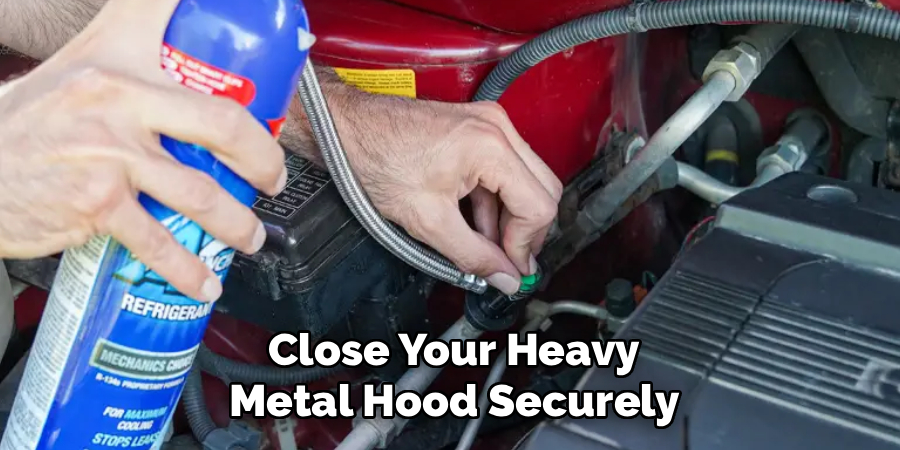
Carefully disconnect the coupler from the low-pressure port. A brief hiss can happen, but a strong spray or long release is not normal. Keep your face away from the fitting while removing the hose.
Replace the service port cap tightly. The cap helps protect the valve from dirt and moisture and can also help prevent slow leakage.
Step 8: Test The AC System After Recharging
Let the AC run for several minutes and check the cooling at the vents. Listen for unusual compressor noises, watch for rapid cycling, and notice whether the air stays consistently cool at idle and while driving.
If the system cools well and the pressure stays in range, the recharge may have helped. If the air is still warm, the pressure drops again, or the system stops cooling soon after, there may be a leak or a failed component.
At this point, how to fill refrigerant in car is only one part of the repair. A leak, bad compressor, faulty pressure switch, clogged expansion valve, or electrical issue needs proper service.
Frequently Asked Questions
How Do I Know If My Car AC Is Low On Refrigerant?
Common signs include warm air from the vents, weak cooling at idle, short compressor cycling, or oily residue near AC hoses and fittings. However, these symptoms can also come from electrical faults, airflow problems, or compressor issues. The most useful first check is a pressure reading with the correct gauge and your vehicle’s recommended pressure range.
Can I Recharge My Car AC By Myself?
Yes, you can recharge a car AC system yourself if it is only slightly low and you use the correct refrigerant, hose, and gauge. You should also feel comfortable working near a running engine and pressurized parts. If the system is empty, leaking, or not cooling after a recharge, stop and have a professional inspect it.
What Happens If I Add Too Much Refrigerant?
Too much refrigerant can raise system pressure and make the AC cool worse. It can also strain the compressor, hoses, condenser, and seals. If you think you overcharged the system, do not vent refrigerant into the air. A repair shop can recover the excess refrigerant safely and recharge the system to the correct amount.
Why Does My AC Need Refrigerant Again So Soon?
If your AC needs refrigerant again shortly after a recharge, the system likely has a leak. Automotive AC systems are sealed, so refrigerant should not disappear quickly during normal use. Leaks can happen at service ports, hoses, seals, the condenser, evaporator, or compressor. Adding more refrigerant may give temporary cooling, but the leak still needs repair.
Is R-134a The Same As R-1234yf?
No, R-134a and R-1234yf are different refrigerants. They are not interchangeable and require different fittings, service equipment, and handling procedures. Many older vehicles use R-134a, while many newer vehicles use R-1234yf. Always check the under-hood label or owner’s manual before buying refrigerant because using the wrong type can damage the AC system.
Conclusion
Recharging car AC refrigerant can restore cooling when the system is slightly low, but the job requires careful steps. You need the correct refrigerant type, the right pressure range, proper safety gear, and patience while adding small amounts.
Now that you understand how to fill refrigerant in car, treat the process as careful maintenance rather than a quick guess. Avoid overcharging, never mix refrigerant types, and do not keep adding refrigerant if the AC has a leak or still blows warm air after the recharge. When the pressure readings look wrong or the cooling does not improve, schedule professional service so the real problem can be found and fixed safely.

About
Ora Hayes is a distinguished figure in the world of DIY Thecarfixes, with over a decade of expertise in automotive diagnostics and high-performance maintenance. Her professional focus lies in merging mechanical precision with modern digital tools, fostering repair solutions that are both cost-effective and highly reliable. As the author of Thecarfixes, Ora Hayes delves into the art and science of automotive restoration, inspiring car owners and hobbyist mechanics alike.
Education
RMIT University (Melbourne, Australia) Associate Degree in Automotive Engineering — Focus on vehicle dynamics, industry-driven repair protocols, and advanced diagnostics. Gained hands-on experience with traditional mechanical tools and modern ECU remapping software.
Nottingham Trent University (United Kingdom) Bachelor’s in Mechanical Design and Automotive Engineering (Honors) — Specialized in automotive systems with a focus on blending technical engineering with everyday usability. Participated in industry projects, working with leading automotive manufacturers to gain real-world insights into vehicle longevity.
Publications and Impact
In Thecarfixes, Ora Hayes shares her insights on troubleshooting complex engine issues, material durability, and strategies for efficient garage setups. Her writing bridges the gap between professional mechanic knowledge and the home enthusiast’s needs, making it a must-read for both everyday drivers and seasoned gearheads.