A vehicle blowing warm air on a sweltering afternoon often initiates a highly frustrating experience. You adjust the climate control dial expecting immediate relief, but instead receive a stagnant, humid breeze. This scenario might suggest your cabin cooling system lacks the proper internal pressure required to function effectively.
Industry data appears to indicate that nearly 80% of vehicle air conditioning failures stem from improper refrigerant levels. Before rushing to a mechanic, you can perform basic diagnostic checks in your own driveway. Understanding how to check car ac pressure without gauge remains a highly practical skill for any vehicle owner.
This guide will explore how to evaluate your system’s health safely. We will rely entirely on basic sensory observations. You will learn to use touch, sight, and sound to identify potential malfunctions without needing specialized manifold equipment.
Check Car AC Pressure Without a Gauge
Inspect the Refrigerant Lines
Begin by locating the refrigerant lines in your car’s AC system. Use your hands to feel these lines for temperature differences. Ideally, one line should feel notably cold (low-pressure line), and the other should feel warm or hot (high-pressure line). If both lines feel similar, it may indicate low refrigerant levels or an issue with the compressor.

Listen for Unusual Sounds
Turn on the AC system and set it to the coldest setting with maximum fan speed. Pay close attention for abnormal noises such as hissing, clicking, or grinding. These sounds could be a sign of refrigerant leaks, failing components, or a malfunctioning compressor. Regular sounds like a gentle hum suggest the system may be functioning correctly.
Step-by-Step Guide: How to Check Car AC Pressure Without Gauge
Evaluating a pressurized chemical loop without precise instrumentation requires a methodical, sensory-based approach. While a professional manifold set provides exact numerical data, human senses can often identify major mechanical malfunctions. We can detect extreme pressure drops simply by observing how the external components behave under load.
Think of this sensory check as taking a person’s temperature by feeling their forehead. It does not provide a precise numerical reading. However, it clearly indicates whether a significant problem exists.
You must exercise extreme caution when working near moving engine parts. Keep your hands entirely clear of spinning belts and radiator fans.
Step 1: Start the Engine and AC System
Begin the diagnostic process by parking your vehicle on a completely flat, stable surface. Open the hood securely and ensure your workspace receives adequate ambient lighting. Start the engine and let it idle smoothly.

Move into the cabin and set the air conditioning to its maximum cooling configuration. Turn the blower fan to the highest possible speed. Engaging the maximum settings creates the highest physical demand on the mechanical compressor.
Creating this maximum demand makes potential mechanical symptoms much easier to detect. A healthy system should begin blowing noticeably cooler air within three to five minutes of startup. If the vent temperature remains entirely unchanged, the system pressure has likely fallen below operational thresholds.
Step 2: Listen for Compressor Engagement
The compressor acts as the beating heart of the entire thermal loop. Stand safely near the engine bay and listen closely to the mechanical rhythm. You should hear a distinct, metallic click followed by a very slight dip in engine RPM.
This specific auditory sequence indicates the compressor clutch successfully engaging. A healthy compressor generally produces a steady, low-pitched hum while it circulates the pressurized gas. If the system lacks adequate refrigerant, the internal safety switches will often intervene.
A system critically low on gas might rapid-cycle, clicking on and off violently every few seconds. In severe cases of pressure loss, the clutch may fail to engage entirely. The low-pressure safety switch actively prevents the compressor from spinning dry and destroying its internal bearings.
Step 3: Feel the High and Low Pressure Lines
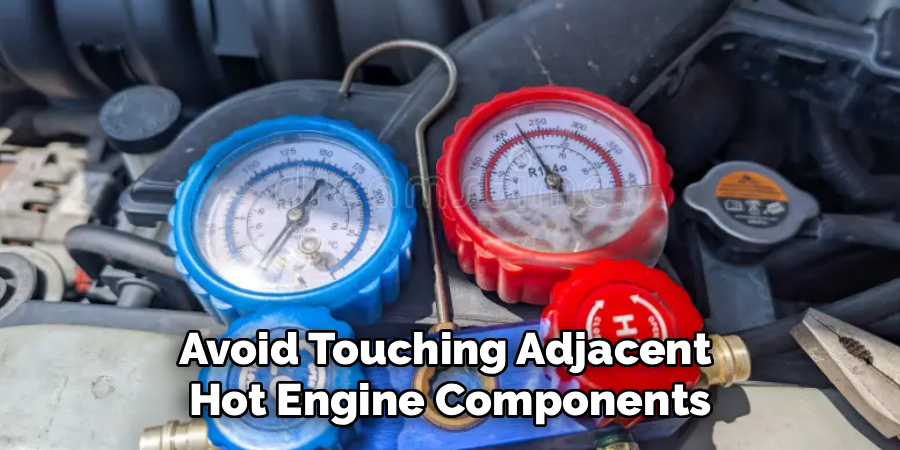
Locate the two primary aluminum air conditioning tubes running along the firewall or inner fender. You must avoid touching adjacent hot engine components, particularly the exhaust manifold, which causes severe burns instantly. The cooling system utilizes two distinct line sizes to manage the chemical phase changes.
Identify the thicker metal tube, known as the low-pressure suction line. Carefully feel the exterior of this thick pipe with your bare hand. Under normal operating pressures, this specific line should feel ice cold and produce visible condensation.
The sensation should mimic holding a cold beverage can taken straight from a refrigerator. Next, lightly tap the thinner metal tube, which represents the high-pressure discharge line. This narrow pipe should feel noticeably warm to the touch.
If both tubes remain at the same ambient temperature, the internal pressure has likely equalized. This equalization almost always points to a severe refrigerant leak somewhere in the closed loop.
Interpreting Visual and Auditory Clues
Gathering multiple pieces of sensory evidence helps confirm your initial physical diagnosis. The primary touch test provides a solid baseline, but supplementary clues often reveal the exact location of the failure. Visual inspections reportedly catch over 60% of major system leaks before electronic detectors are even deployed.
You should scan the engine bay methodically. The physical components often leave distinct environmental markers when they fail.
Spotting Oily Residue and Leaks
Inspect the rubber hoses, metallic connection points, and the face of the compressor closely. You are searching for unusual accumulations of dirt or dark grime. Refrigerant gas always carries a specialized lubricating oil throughout the pressurized loop.
When the volatile gas escapes through a microscopic pinhole, the heavy oil stays behind on the surrounding metal. This sticky oil instantly attracts a thick layer of blowing road dust. Spotting an isolated, filthy patch on a fitting strongly points toward a pressure-dropping chemical leak.
Pay particular attention to common failure zones like the service valve caps. The delicate aluminum fins of the condenser, located directly behind the front plastic grille, also suffer frequent rock damage.
Decoding Hissing or Clicking Sounds
A struggling thermal system frequently produces distinct auditory warning signs. A loud hissing noise emanating from behind the dashboard often means the evaporator core is starving for liquid refrigerant. This hiss usually suggests the system pressure has dropped substantially.
You might compare this specific dashboard hiss to the sound of a slowly deflating bicycle tire. Alternatively, pay attention to grinding or squealing noises originating from the engine bay. These harsh sounds could indicate that the compressor itself is failing mechanically.
Compressor failure frequently occurs because a lack of refrigerant also means a lack of circulating lubrication. This mechanical starvation ties directly back to prolonged low gas levels.
Understanding the Limits of Sensory Testing
Sensory checks remain incredibly useful for identifying foundational system issues. However, these basic diagnostic methods possess definitive physical limits. Modern automotive climate control systems hold highly precise amounts of chemical gases.
Manufacturers often measure these specific requirements down to the exact ounce. You cannot determine precise volumes using merely touch and sound. We must understand these limitations to prevent accidental, costly mechanical damage.
The Risk of Overcharging
Many vehicle owners blindly purchase store-bought cans of pressurized refrigerant based entirely on a negative sensory test. Adding gas without gauge readings presents a massive mechanical risk. Overcharging the thermal loop creates excessive internal stress on aging components.
This extreme pressure can easily blow rubber seals or permanently shatter the compressor valves. Interestingly, adding too much pressure actually causes the system to blow warm air, mimicking the exact symptoms of low pressure. A blown compressor could easily cost upwards of a thousand dollars to replace professionally.
When to Seek Professional Diagnostics
You must recognize exactly when to stop testing and call a certified technician. If the compressor clutch completely refuses to spin, the underlying electrical or mechanical issue requires complex electronic diagnostic tools. Obvious physical damage to the condenser matrix also necessitates immediate professional intervention.
Repairing these systems legally requires an evacuation machine to recover the remaining gases safely. Environmental regulations strictly prohibit venting automotive refrigerants directly into the atmosphere. Trusting a professional ensures your vehicle remains legally compliant and mechanically sound.

Conclusion
Evaluating a failing climate control system does not strictly require expensive manifold sets for a basic initial diagnosis. We have explored the fundamental steps of diagnosing an air conditioning system using touch, sight, and sound. Identifying the distinct temperature difference between the thick cold line and the thin warm line remains the ultimate indicator of basic system health.
This sensory approach helps you gather critical diagnostic evidence before spending money at a dealership. Knowing exactly how to check car ac pressure without gauge empowers you to make highly informed maintenance decisions. The next time your vents blow humid, stale air, perform these quick sensory tests to uncover the hidden mechanical truth.

About
Ora Hayes is a distinguished figure in the world of DIY Thecarfixes, with over a decade of expertise in automotive diagnostics and high-performance maintenance. Her professional focus lies in merging mechanical precision with modern digital tools, fostering repair solutions that are both cost-effective and highly reliable. As the author of Thecarfixes, Ora Hayes delves into the art and science of automotive restoration, inspiring car owners and hobbyist mechanics alike.
Education
RMIT University (Melbourne, Australia) Associate Degree in Automotive Engineering — Focus on vehicle dynamics, industry-driven repair protocols, and advanced diagnostics. Gained hands-on experience with traditional mechanical tools and modern ECU remapping software.
Nottingham Trent University (United Kingdom) Bachelor’s in Mechanical Design and Automotive Engineering (Honors) — Specialized in automotive systems with a focus on blending technical engineering with everyday usability. Participated in industry projects, working with leading automotive manufacturers to gain real-world insights into vehicle longevity.
Publications and Impact
In Thecarfixes, Ora Hayes shares her insights on troubleshooting complex engine issues, material durability, and strategies for efficient garage setups. Her writing bridges the gap between professional mechanic knowledge and the home enthusiast’s needs, making it a must-read for both everyday drivers and seasoned gearheads.