Are you feeling frustrated because you accidentally locked your car keys inside the vehicle? Don’t worry, it happens to the best of us. Instead of panicking and calling a locksmith, you can actually unlock your car door with just a few simple tools and techniques.
Staring through your car window at your keys resting on the driver’s seat brings a unique feeling of frustration. We have all experienced that sinking realization at least once. Before you panic or call an expensive locksmith, you have several alternative solutions at your disposal.
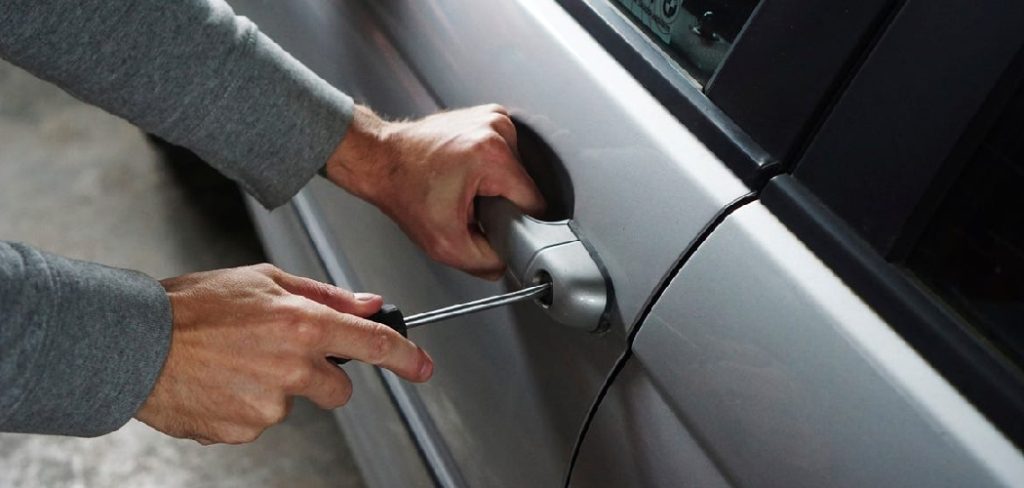
This guide on how to unlock a car door with keys inside explores practical, manual techniques you can use to regain access to your vehicle. You will learn the benefits of DIY unlocking, the tools required, a clear 10-step process, and the crucial mistakes you must avoid along the way.
What are the Benefits?
Learning how to bypass your car lock manually offers several distinct advantages. First, it saves you significant money. Professional locksmiths and towing services often charge hefty emergency fees, especially outside of regular business hours. Second, mastering these techniques saves valuable time. Instead of waiting an hour for roadside assistance to arrive, you can resolve the issue yourself in minutes. Finally, understanding how your vehicle’s locking mechanism works builds confidence. You become more self-reliant and better prepared to handle minor roadside emergencies without depending on outside help.
What Will You Need?
To successfully unlock your car without an app or a professional, you need a few basic household items. Depending on your car’s specific lock type (manual pull-up locks vs. electronic buttons), gather the following tools:
- A sturdy wedge
- A wedge tool protector
- A long reach tool
- A sturdy piece of string or shoelace
- Electrical tape
10 Easy Steps on How to Unlock a Car Door With Keys Inside
Step 1: Assess Your Specific Lock Type
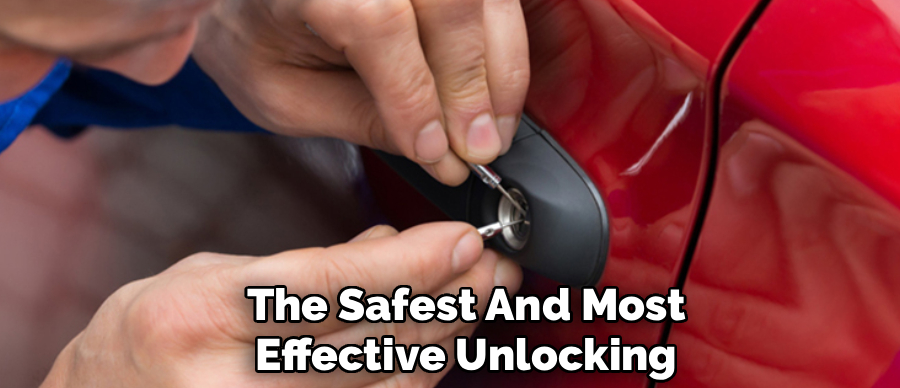
Start by identifying which type of lock your car uses, as this determines the safest and most effective unlocking method. Peer through the window to check if your car has the older vertical post lock (sometimes called a “pop-up” lock), a horizontal slide lock, or electronic buttons. If your vehicle uses an advanced electronic locking system, be aware that manual bypass might not work, and you could risk triggering the alarm. For most standard locks, you can safely proceed, but always avoid forcing modern high-security mechanisms.
Step 2: Check All Other Doors and the Trunk
It’s easy to focus solely on the locked driver’s door, but don’t overlook the obvious. Go around the entire vehicle, testing each passenger door and even the back hatch or trunk. Manufacturers sometimes set up rear seatbacks to fold with trunk access, which could let you reach your keys from inside. If you find an unlocked entry point, you’ll save yourself time and eliminate potential risk to your car.
Step 3: Prepare Your Protective Materials
Before using any tools, safeguard your car’s finish. Drape a soft cloth or microfiber towel over the spot where you’ll insert the wedge, saving the paint and weather stripping from accidental scratches. If using any metal tool, such as a coat hanger, wrap its ends with several layers of electrical tape—this small step prevents major cosmetic damage and extends the life of your weather sealing.
Step 4: Insert the Wedge into the Door Frame
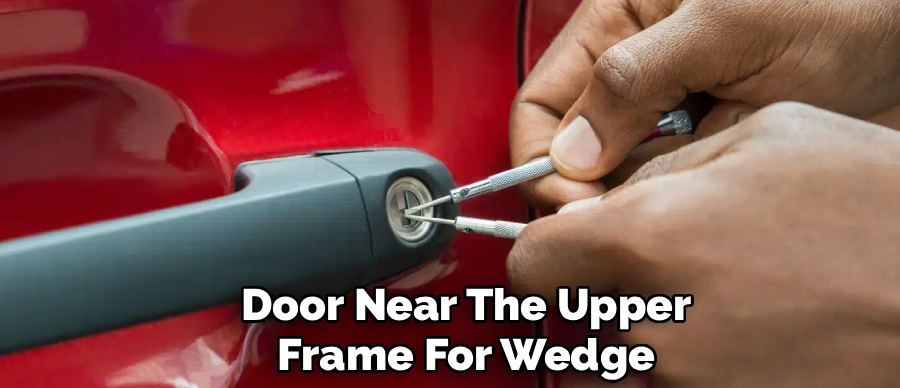
Carefully select a corner of the door near the upper frame for wedge placement (usually above the lock area). Gently tap the wedge into the gap just enough to create space—avoid brute force, which can warp the door or damage seals. Inflate an air wedge slowly using its pump, or wiggle a plastic wedge while cushioning the motion with your hand. Your goal is just enough space for your tool, not to pry the door wide open.
Step 5: Expand the Gap Carefully
Ease the wedge in gradually to create a gap of about a quarter- to half-inch—no more is required. Continuously monitor the gap and stop if you feel resistance or see the metal bending. Over-expansion can lead to permanent damage, making it hard to properly close or seal the door later. If you meet strong resistance, pause, and reposition the wedge to a less rigid area.
Step 6: Shape Your Long Reach Tool
Unwind a metal coat hanger or choose an appropriate rod and customize the end to match your locking mechanism. For post locks, form a small hook to catch and lift the knob. For buttons, bend a flat “paddle” or small loop that can easily press or slide the release. Take your time getting the right shape—a precise tool significantly lowers the chance of a scratched interior or failed attempt.
Step 7: Feed the Tool Through the Gap
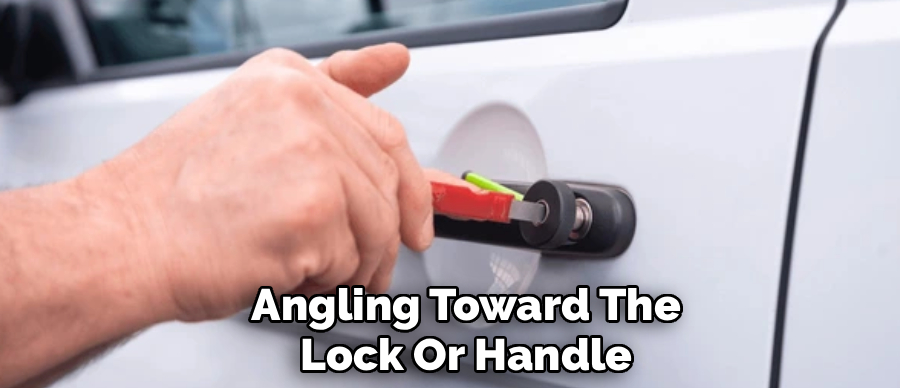
Slowly insert your reach tool into the space made by the wedge, angling toward the lock or handle. Use a side-to-side or gentle up-and-down movement to guide past any weather stripping without tearing it. If using a flexible wire, support it with your other hand just outside the gap for better precision and to avoid kinking.
Step 8: Engage the Locking Mechanism
As you bring the tool near the lock, use careful, deliberate movements. If attempting to hook a post, approach slowly, loop around its base, and steadily pull up until you see it move. For electronic buttons, line the tool up and press firmly but gently. In some cases, you may need to repeat this process a few times to get the right contact. Listen and watch closely for the sound or sight of the lock disengaging.
Step 9: Remove Your Tools Safely
Once the lock is open, don’t rush. Withdraw your reach tool the same way it went in, making sure it doesn’t snag or scuff on the way out. For inflatable air wedges, release the air slowly so the frame readjusts evenly; for rigid wedges, wiggle gently to remove them without pulling against the door’s shape. Inspect the area for any damage or displaced seals.
Step 10: Open the Door and Retrieve Keys
Test the door handle to confirm the lock is released. Open the door gently, grab your keys, and then double-check your car’s condition before shutting it again. As a precaution, roll down a window if possible until you’ve confirmed all locks now function as intended. This prevents repeat lockouts as you tidy up tools or reposition seats and ensures safe, stress-free results from your DIY unlock.

5 Things You Should Avoid
- Do Not Use Excessive Force: Forcing wedges deep into the door frame will bend the metal permanently, causing wind leaks and water damage later.
- Avoid Sharp, Unprotected Metal: Never stick an untaped coat hanger or bare screwdriver into the door gap, as this easily chips the paint and destroys rubber seals.
- Do Not Try the Tennis Ball Trick: The internet myth of using a tennis ball with a hole burned in it to force air pressure into the keyhole does not work on modern vehicles.
- Do Not Ignore the Weather Stripping: Tearing the rubber seal around your door frame will lead to severe road noise and internal rust.
- Avoid Breaking a Window Unnecessarily: Unless a life is in immediate danger, breaking glass is highly dangerous and requires expensive professional replacement.
Frequently Asked Questions
- Will Using a Coat Hanger Damage My Car?
Yes, using a wire coat hanger carries a real risk of scratching your car’s exterior paint. You can also easily puncture the weather stripping around the window frame. Rough movements might tear the rubber seal entirely, leading to water leaks. If you push too hard inside the door panel, you could disconnect internal locking wiring. Always wrap the wire in electrical tape to minimize these specific risks. - Does Auto Insurance Cover Lockout Services?
Many premium auto insurance policies automatically include roadside assistance for accidental lockouts. You need to check your specific policy details or mobile app to confirm this coverage. Some insurance providers will dispatch a professional locksmith to your location immediately. Others require you to pay the locksmith upfront and submit a receipt for reimbursement later. Call the toll-free number on your insurance card to verify your available options. - Should I Break a Window in an Emergency?
You should only break a vehicle window if a child or a pet is trapped inside on a hot day. Breaking glass creates a serious risk of bodily injury from flying shards. It also results in a very expensive repair bill for your vehicle. If you must break one, choose the side window furthest from any occupants to keep them safe. Emergency services can usually arrive quickly to handle the situation safely if you call 911.
Conclusion
Locking your keys inside your car is a temporary inconvenience, not a permanent disaster.
By understanding your vehicle’s locking mechanism and using simple household tools safely, you can quickly regain access to your driver’s seat. Remember to work slowly, protect your vehicle’s paint with proper padding, and never force a tool where it does not fit. If manual methods fail or you feel uncomfortable performing these steps, you can always reach out to a professional roadside assistance service to get you back on the road.
Hopefully, this guide on how to unlock a car door with keys inside has provided you with the necessary information to handle a locked car door with ease.

About
Ora Hayes is a distinguished figure in the world of DIY Thecarfixes, with over a decade of expertise in automotive diagnostics and high-performance maintenance. Her professional focus lies in merging mechanical precision with modern digital tools, fostering repair solutions that are both cost-effective and highly reliable. As the author of Thecarfixes, Ora Hayes delves into the art and science of automotive restoration, inspiring car owners and hobbyist mechanics alike.
Education
RMIT University (Melbourne, Australia) Associate Degree in Automotive Engineering — Focus on vehicle dynamics, industry-driven repair protocols, and advanced diagnostics. Gained hands-on experience with traditional mechanical tools and modern ECU remapping software.
Nottingham Trent University (United Kingdom) Bachelor’s in Mechanical Design and Automotive Engineering (Honors) — Specialized in automotive systems with a focus on blending technical engineering with everyday usability. Participated in industry projects, working with leading automotive manufacturers to gain real-world insights into vehicle longevity.
Publications and Impact
In Thecarfixes, Ora Hayes shares her insights on troubleshooting complex engine issues, material durability, and strategies for efficient garage setups. Her writing bridges the gap between professional mechanic knowledge and the home enthusiast’s needs, making it a must-read for both everyday drivers and seasoned gearheads.