Blazing-hot summer, windows down, the world is shimmering with heat—and your car’s air conditioner suddenly decides it’s time for a nap. If the air slipping from the vents feels only slightly cooler than your frustration, or there’s a tinny rattle beneath the hood every time you hit the AC button, you’re probably eyeing the source: that squat little compressor lurking among the belts. Sometimes the warning signs are almost polite. Sometimes, not so much.

Now, I won’t claim this guide on how to know if your car ac compressor is bad will turn anyone into a seasoned mechanic after one read. But getting a handle on the symptoms of a faltering compressor? That just might keep you, and your budget, from enduring the icy horror of a dead AC in July traffic. Catch issues sooner, and you might nurse your system along with minor fixes instead of forking over for total AC surgery. Here’s how I’d approach diagnosing a moody compressor (without losing your cool or your wallet).
What Exactly Does a Car AC Compressor Do?
Imagine the compressor as your climate control system’s workhorse—one that doesn’t like attention but shoulders most of the effort. Its job is to shove pressurized refrigerant through a maze of lines, making sure heat gets pulled from your cabin and tossed outside. If the compressor takes the day off, heat wins, and you’re left with warm, uninspired gusts.
Flip on the AC, and the compressor’s clutch kicks in, leeching power from the engine. Think of the clutch as a middleman—it grabs the energy and forces the low-pressure refrigerant to become a high-pressure, hot stream, bound for the condenser. Should the compressor fail here, the whole AC waltz grinds to a halt. Warm air and bleak resignation are your only companions.
What’s the First Sign Your Compressor’s on the Fritz?
Let’s be honest here: compressors rarely go quietly. Most often, the AC’s performance nosedives, but not all at once. Maybe you expect arctic blasts on high, but only a bland breeze comes out. Or you crank the dial and the system seems to ignore you—tempting, perhaps, to assign blame elsewhere, but history suggests the compressor is already calling in sick.
Sounds are another giveaway. Few things are as alarming as sudden screeches, clangs, or grinding from your engine compartment, particularly when they pop up only with the AC switched on. A quiet compressor is a happy compressor; anything else invites concern. Add in mystery puddles under the car, or a clutch that refused to engage no matter how nicely you ask, and you have a pretty clear suspect.
Why Do AC Compressors Give Up the Ghost?
Not to point fingers, but compressors are especially sensitive to neglect. Often, running them low on oil—a detail many overlook thanks to slow, sneaky leaks—leads to metal-on-metal mischief inside the unit. The friction racks up quickly, sometimes locking up the entire compressor in dramatic fashion.
Electrical gremlins also like to meddle. A hidden break in the wiring, maybe a fuse that’s died of old age, sometimes even a relay doing its best impression of a brick—any of these can cause the clutch to ignore you. Time, naturally, does what it does best, and the constant battle against contaminants like dirt or metal flakes can send even a stalwart compressor into early retirement.

7 Practical Steps on How to Know if Your Car Ac Compressor is Bad
Step 1: Fire Up the Car and Flip on the AC
For starters, wake up the engine and let it hum to life for a bit. You want everything running at its usual temperature. Then, dial the AC to its coldest, blast the fan, and listen. The compressor should be hustling now. Watch the engine’s behavior—ideally, there’s a tiny dip in RPM as the clutch grabs hold. If the engine doesn’t even flinch or nearly stalls, you may already have a seized compressor clutch.
Step 2: Eavesdrop Under the Hood
Lift the hood (cautiously—moving parts, after all), and get your ears as close as safely possible. The compressor, hanging near the engine’s front, should run quietly, aside from a recognizably soft click when the clutch bites on. Any high-pitched whines, metallic gnashing, or ugly rattles? Signs of trouble—not always catastrophic, but definitely not healthy.
Step 3: Feel What’s Coming Out of the Vents
Back in the driver’s seat, hold your palm right in front of a vent. You want more than a whisper of chill—successful systems feel cool, dry, and sharp compared to the outside air. Give it a few minutes to settle at max cold. If the air hovers a little above “meh” or outright warm, you’re seeing textbook symptoms—either a weak compressor or a clutch that can’t keep up. Sometimes it starts cold but gets lazy—don’t ignore that, either.

Step 4: Watch the Compressor Clutch
Peer down at the compressor itself (a flashlight helps, and a friend at the wheel is even better). When you flick the AC on and off, the clutch at the front should jump to attention, spinning in unison with the pulley. If the pulley moves but the clutch just stares back at you, there’s no engagement—often an electrical problem, though the clutch could’ve simply failed. If the clutch engages for a moment and then gives up, the system may be playing defense against very low refrigerant.
Step 5: Scan for Oil or Refrigerant Leaks
Take your flashlight and survey the compressor’s body, especially where hoses meet metal. Usually, you won’t spot actual refrigerant (it happily becomes gas and vanishes), but greasy residue or sticky buildup near connectors is a classic warning. If it’s wet or filthy there, too much lubricant may have seeped out. Without oil, compressors don’t just age—they self-destruct.
Step 6: Give the Serpentine Belt a Once-Over
Now, switch off the engine and pocket the keys. Study the belt wrapped around the compressor pulley. You’re looking for cracks, frayed spots, or sections missing altogether. If it looks weary or loose, that’s trouble—without the right tension, it’ll just slip and squeal (sometimes loudly). Worst case, this can mimic compressor failure, but a new belt solves it without a costly overhaul.
Step 7: Pressure Test, If You Can
For the number crunchers among us, a set of AC manifold gauges tells the story. Hook them up to the correct ports (one high-pressure, one low). Fire up the engine and crank the AC. Typical compressors will display pressures that fall into certain ranges (details depend heavily on outside temps). Odd results—low side excessively high, high side oddly low—often mean the compressor has called it quits internally. At this point, peeking or listening isn’t enough; the gauges have spoken.

Following these steps on how to know if your car ac compressor is bad can save you time and money. It is important to regularly maintain your car’s AC system and pay attention to any warning signs that may indicate a failing compressor. By catching the issue early on, you can prevent further damage to your car and avoid costly repairs.
A Few Extra Pointers
Before surrendering to despair (and the mechanic’s invoice), check the basics. Fuses—cheap and easy. Relays—same story. Sometimes, the entire compressor clutch refuses to budge because of an insignificant electrical hiccup.
The owner’s manual can help you navigate the fuse box. If you’re lucky, a ten-dollar swap fixes things.
How to Keep Your Compressor Healthy?
You can prevent a lot of drama with minor, regular rituals. Run your AC for about ten minutes every month—even in winter—just to keep everything lubricated and flexible.
Make a habit of asking your mechanic to verify refrigerant levels and change the cabin filter with annual service. Neglect allows seals to dry out and clog, nudging your system closer to failure.
When Is It Time to Call in the Professionals?
Messing with pressurized systems isn’t for everyone. If the compressor shouts at you with metal screeches, or if those gauge readings go rogue, think twice before grabbing a wrench. Leak repairs and refrigerant handling aren’t just tricky—they’re subject to legal limits due to environmental impact.
Pros come with the right (regulated) hardware to safely suck out what’s left, flush out hidden debris, and plumb in a new unit without further harm.
Frequently Asked Questions
Q1: Is It Safe to Drive With a Faulty AC Compressor?
You can probably limp along without AC, yes. The engine won’t care—unless the compressor pulley seizes solid. That’s when things get ugly: the belt snaps, and you abruptly lose not just AC but power steering and battery charging. That’s how breakdowns on the highway begin.
Q2: What Should I Budget for Compressor Replacement?
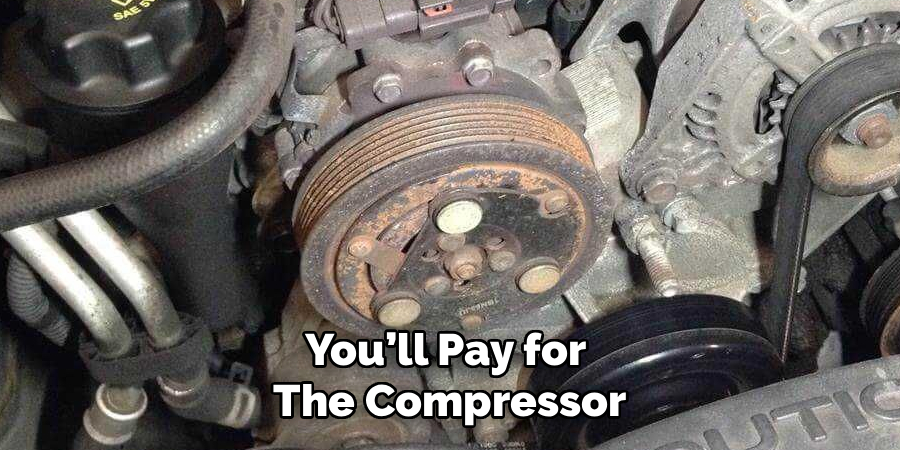
It’s not cheap. Most replacements—parts and labor—land somewhere between $800 and $1,500, wildly variable depending on your vehicle’s make and how the labor’s split up. You’ll pay for the compressor, plus work on the refrigerant circuit, and often a few side parts (like driers or accumulators).
Q3: Can a Bad Compressor Mess with the Engine?
Not directly, no—unless the compressor’s internal parts seize or drag. Then, every turn of the belt makes your engine work extra hard. The result? Poor mileage, sluggish throttle, and risky stalling when you crank the AC. Let it go too long, and you’ll notice the difference.
Conclusion
Testing your AC compressor doesn’t require a fortune or advanced training—just patience and some careful listening. Catching odd noises, weak airflow, or clutch misbehavior early means you can fix the small stuff before it balloons.
Of course, if you’re out of your depth, there’s no shame in calling for backup. Reliable, chilled air is a small luxury—don’t let it slip away without a fight. Thanks for reading this guide on how to know if your car ac compressor is bad.

About
Ora Hayes is a distinguished figure in the world of DIY Thecarfixes, with over a decade of expertise in automotive diagnostics and high-performance maintenance. Her professional focus lies in merging mechanical precision with modern digital tools, fostering repair solutions that are both cost-effective and highly reliable. As the author of Thecarfixes, Ora Hayes delves into the art and science of automotive restoration, inspiring car owners and hobbyist mechanics alike.
Education
RMIT University (Melbourne, Australia) Associate Degree in Automotive Engineering — Focus on vehicle dynamics, industry-driven repair protocols, and advanced diagnostics. Gained hands-on experience with traditional mechanical tools and modern ECU remapping software.
Nottingham Trent University (United Kingdom) Bachelor’s in Mechanical Design and Automotive Engineering (Honors) — Specialized in automotive systems with a focus on blending technical engineering with everyday usability. Participated in industry projects, working with leading automotive manufacturers to gain real-world insights into vehicle longevity.
Publications and Impact
In Thecarfixes, Ora Hayes shares her insights on troubleshooting complex engine issues, material durability, and strategies for efficient garage setups. Her writing bridges the gap between professional mechanic knowledge and the home enthusiast’s needs, making it a must-read for both everyday drivers and seasoned gearheads.